Mattress care guide
How to Care for a Natural Latex Mattress: Rotation, Protection and Cleaning
A natural latex mattress is built for comfort and support, but it still benefits from thoughtful care. The right bed base, a well-fitting protector and a gentle approach to cleaning can help keep its surface in good condition. Before you reach for a vacuum or start rotating the mattress, though, check the maker’s instructions: latex mattresses differ in construction, covers and care requirements.
Start with the care label, not a cleaning hack
It is tempting to treat every mattress alike. Strip off the sheets, sprinkle on a cleaning powder, give the surface a thorough scrub and call it a reset. With a natural latex mattress, that routine may be more enthusiastic than helpful. Latex, wool, cotton and other components can respond differently to moisture, heat and friction, while some covers are removable and others are not.
Before setting up or cleaning your mattress, look for the care label, warranty information and instructions from the manufacturer. Check whether the outer cover can be removed, whether it is washable, and whether the mattress itself is intended for spot cleaning only. If instructions are unclear, contact the maker before trying a product or method that could affect the materials or warranty.
This matters even when two mattresses look similar. One may have a zippered cover designed to come off for a specific kind of care; another may have a non-removable cover that should never be put in a washing machine. A layered model may also have components that are handled separately. The safest rule is simple: do not unzip, wash, soak or dismantle anything unless the manufacturer says to do so.
Choose a suitable bed base
A mattress does not work in isolation. The surface beneath it helps support its weight, and the base can influence how well air circulates around the mattress. Some natural latex mattresses are designed for breathable slatted frames; others may be compatible with a solid platform or an adjustable base. These details are model-specific, so check the requirements rather than assuming that a familiar frame will be suitable.
If the instructions call for slats, look for guidance about their spacing, width and overall support. Slats that are too widely spaced, uneven or damaged may fail to provide consistent support. A frame should also be strong enough for the mattress and sleepers, with no loose joints or sharp edges that could catch the fabric. For a platform or adjustable base, verify that the mattress is approved for that type of use.
Good ventilation is another practical consideration. A damp, poorly ventilated room or a base that traps moisture can make it harder for bedding to dry out between uses. Leave enough room around the bed for air to move, and follow any advice about using a breathable base or keeping the mattress off the floor. If the mattress becomes damp, address the cause and allow it to dry fully in a well-ventilated space, following the maker’s guidance.
As you set up the bed, check that the mattress sits evenly and that its corners and edges are not being forced into an unsuitable frame. A supportive base cannot correct every comfort issue, but it can help avoid unnecessary strain on the mattress. Recheck the frame occasionally, especially if you hear new creaks or notice movement.
Should you rotate a natural latex mattress?
Rotation is often discussed as a general mattress-care habit, but it is not a universal instruction. Some mattresses are designed to be rotated head-to-foot; others have a designated top and bottom, layered components or a construction that means rotation is not recommended. Turning a mattress over is a different matter: a one-sided design should not be flipped unless its maker specifically says otherwise.
Check the label or product instructions for the exact advice. If rotation is recommended, look for the suggested schedule and whether the mattress should be rotated by 180 degrees. There is no single timetable that fits every latex mattress. Follow the manufacturer’s recommendation rather than relying on a generic calendar or assuming that more frequent rotation is always better.
When moving the mattress, use two people if it is heavy or awkward to handle. Support it evenly and avoid dragging it across the floor, bending it sharply or lifting it by handles that are not intended for carrying. Some handles are designed only to help position a mattress, not to bear its full weight. If your model has layers that can be rearranged, follow the specific instructions for that process and keep track of their intended order.
Rotation is not a fix for a weak base, an unsuitable frame or a mattress that has reached the end of its useful life. If you notice an unexpected dip, uneven support or a change in feel, first check the base and consult the maker’s guidance. Warranty terms often define what counts as a defect and how a concern should be reported.
Use a mattress protector for everyday defence
A washable mattress protector is a straightforward way to help shield the surface from sweat, spills, dust and everyday dirt. Choose one that fits the mattress securely without pulling tightly across the corners or bunching under the sheets. A protector should not interfere with the mattress’s fit on its base, and any claims about waterproofing, breathability or material content are worth checking against the product details.
Wash the protector according to its own care label. That label may recommend a particular temperature, detergent or drying method. Make sure it is completely dry before putting it back on the bed. A damp protector can transfer moisture to the mattress and bedding, so patience here is more useful than rushing to remake the bed.
A protector is helpful, but it is not permission to ignore a spill. Liquids can seep through seams, openings or an ill-fitting cover, and prolonged moisture is best avoided. If something spills, remove the bedding and protector promptly, then follow the mattress maker’s directions for the surface beneath it.
For a layered mattress with a removable outer casing, do not assume that the casing is machine washable just because it has a zip. A zip may simply provide access to internal layers, or the cover may require spot cleaning. Confirm the intended care method before opening it. When in doubt, leave the cover in place and ask the manufacturer what to do.
How to clean a natural latex mattress safely
For routine care, keep the mattress protected with sheets and a clean protector, and deal with marks promptly. When cleaning is needed, use only a method permitted by the manufacturer. Many mattresses should be spot cleaned rather than soaked or washed, and a non-removable cover should not be put through a washing machine.
If spot cleaning is allowed, begin gently. Remove the bedding, check the instructions and use the smallest amount of suitable cleaning solution. Apply it to a clean cloth rather than pouring liquid directly onto the mattress. Blot the affected area carefully; avoid scrubbing, which can roughen fabric or push a stain deeper. Follow the maker’s directions about whether to use water, a particular cleaner or no liquid at all.
Afterwards, let the area dry thoroughly before replacing the protector and sheets. Keep the room ventilated and avoid using high heat unless the manufacturer specifically approves it. Hairdryers, heaters and direct intense sunlight can expose materials to heat they were not designed to withstand. Do not sleep on a damp mattress or cover it while moisture remains.
Skip deep soaking, steam cleaning and unverified household recipes unless the manufacturer explicitly approves them. Even a familiar cleaning ingredient can affect a cover, colour or material in an unexpected way. Strong fragrances and harsh chemicals may also linger where you sleep. A restrained approach is usually the safer one: treat the mark, dry the area and stop once it is clean enough.
Vacuuming is not automatically suitable for every mattress either. Check the care instructions before using a vacuum, and if it is allowed, use a clean upholstery attachment with gentle pressure. Avoid aggressive brushing or tools that may snag the fabric. The aim is light surface care, not a deep clean that stresses the cover.
Small habits that help keep a mattress fresh
Much of good mattress care is pleasantly ordinary. Change and wash sheets regularly, follow the protector’s care label and let bedding air out when practical. If you are changing the sheets, take a moment to check for moisture, marks or damage before making the bed again. Catching a small spill early can make it much easier to deal with.
Keep food and drinks away from the mattress where possible, and take care with cosmetics, oils and lotions that can transfer to fabric. If pets share the bed, a protector may be especially useful, but it still needs to fit properly and be washed as directed. Avoid standing or jumping on the mattress, which can place concentrated stress on its surface and internal structure.
When moving house or storing a mattress, follow the maker’s handling and storage instructions. Protect it from dirt and moisture, and do not leave it folded, bent or compressed unless the design specifically permits that. Store it in a clean, dry location and keep it away from sharp objects that could puncture the cover.
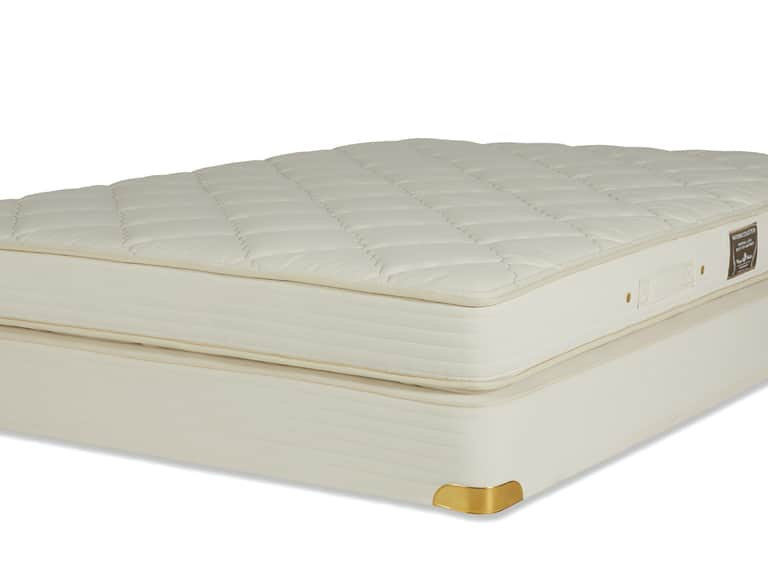
For a mattress with natural materials such as wool or cotton, the complete construction matters. For example, the Savvy Rest Serenity Latex Mattress is described as having latex layers inside an organic cotton casing quilted with wool. Its product information specifies spot cleaning for the cover rather than machine washing. That is a useful reminder that care advice belongs to the individual mattress, not simply to the word “latex.”
When a mark or spill needs extra attention
First identify what has been affected: the sheet, the protector or the mattress cover. Remove and launder washable bedding according to its label, then check whether any liquid reached the mattress. If it did, follow the mattress manufacturer’s cleaning instructions and act promptly without soaking the area.
For a large spill, persistent odour or mark that does not respond to approved spot cleaning, contact the maker before escalating to a professional cleaner. Ask whether the cover can be removed, what products are acceptable and whether a cleaning service could affect the warranty. Keep a record of the advice and any steps you take, especially if you may need to make a warranty enquiry later.
Do not try to conceal a problem by adding fragrance, layering on powders or sealing a damp area beneath a protector. These approaches may mask the immediate issue without solving it. Drying and ventilation matter, and a persistent moisture problem should be addressed at its source.
Read warranty terms before a problem arises
A warranty is not a care manual, but it can clarify what the manufacturer expects. Read the terms when you buy the mattress and keep the product details somewhere accessible. Check the requirements for the bed base, the rules about rotating or flipping, the treatment of stains and the process for reporting a defect. Some warranties also specify what documentation or proof of purchase is needed.
Keep the mattress clean and dry, use a suitable frame, and avoid modifications that the maker has not approved. If a concern develops, take clear notes and contact the manufacturer before attempting repairs or using a specialist treatment. The exact warranty coverage varies by product, so do not assume that an issue is covered—or excluded—without checking the terms.
A simple natural latex mattress care checklist
- Read the manufacturer’s instructions before setup, cleaning or rotation.
- Use a base that is approved for your mattress and provides even support.
- Follow the guidance on ventilation and keep the mattress away from persistent damp.
- Rotate only if recommended, and do not flip a one-sided mattress.
- Use a well-fitting, washable protector and care for it according to its label.
- Spot clean only when permitted; do not soak or machine wash a non-removable cover.
- Allow any cleaned area to dry fully before making the bed.
- Contact the manufacturer about major spills, persistent odours or uncertain cleaning methods.
Taking care of a natural latex mattress does not need to become a complicated routine. The most useful steps are often the least dramatic: choose the right base, protect the surface, follow the care label and respond gently when something goes wrong. With those habits in place, you can focus less on elaborate cleaning rituals and more on getting comfortable at bedtime.
Frequently asked questions
Can you wash a natural latex mattress?
Do not wash or soak the mattress unless its manufacturer explicitly instructs you to. Many models are spot clean only, and a non-removable cover should not go in a washing machine. Check the care label before using water or cleaning products.
How often should you rotate a latex mattress?
There is no universal schedule. Some mattresses should be rotated, while others may not need it or may have construction details that affect how they should be handled. Follow the instructions supplied with your specific model.
Can a natural latex mattress go on a slatted bed frame?
Some can, but frame compatibility and slat requirements vary. Check the manufacturer’s guidance for your mattress, including any specifications for spacing and support. Do not assume that every slatted frame is suitable.
Is a mattress protector worth using?
A properly fitted, washable protector can help guard against everyday spills, moisture and dirt. It does not replace the mattress care instructions, and it should be washed and dried according to its own label.
What should you do if a spill reaches the mattress?
Remove the bedding and protector promptly, then check the mattress instructions for approved spot-cleaning steps. Avoid soaking the area, and allow it to dry fully with good ventilation. Contact the manufacturer if the spill is extensive or you are unsure what to use.